What the Factory Platform is built to do
Typical applications, from a single inspection station to a closed quality loop. These are examples of what the platform is designed for, not customer stories. Real results will follow from the pilot programme.
Inspection with Gorad Vision
Defects, measurements, counts and variants, with one verdict per part sent to your PLC.
Connecting rod, complete inspection
A connecting rod can carry a defect anywhere: a chipped edge, a casting void, a dent from handling, a burr left after machining. Checking every face by eye, part after part, is slow and inconsistent.
- Station
- Multi-camera station that covers every face and bore of the rod
- Apps
- Vision · NCR / CAPA
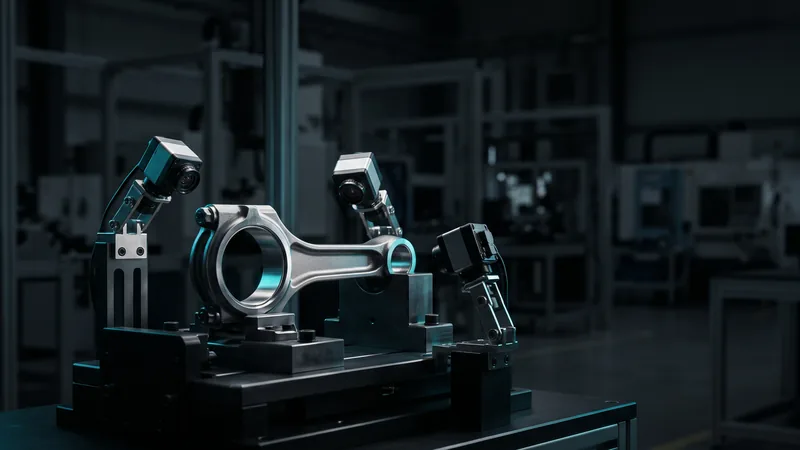
What is checked
- Chip-off and voids
- Dents and burrs
- Machining and milling defects
- Every view combined into one verdict for the rod
When a part fails
The rod is rejected through the PLC, and the operator sees which face failed and why. Every NG image is kept for review.
Air filter catalyst blockage
A few blocked cells may be acceptable; too many are not. The decision is a percentage, and judging a percentage by eye is guesswork.
- Station
- Static station with a camera and controlled lighting over the catalyst face
- Apps
- Vision · SPC
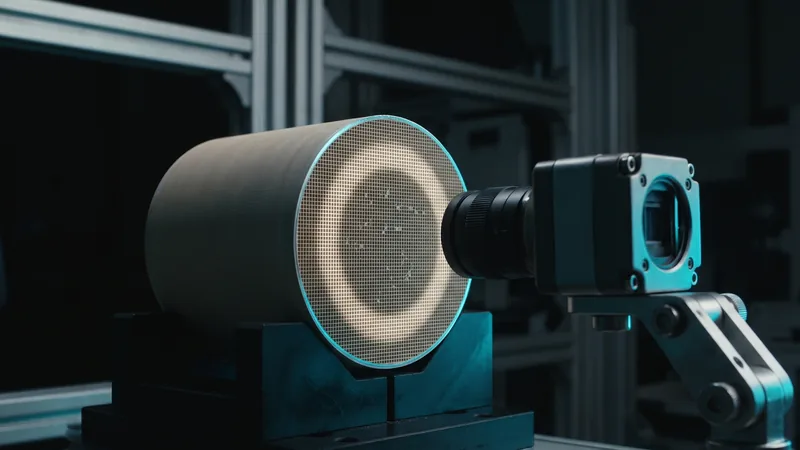
What is checked
- Finds blocked cells across the catalyst face
- Calculates the blocked share as a percentage
- Compares it with the threshold you set in the program
When a part fails
Above the threshold, the part is rejected and the measured percentage is recorded, so you see how close each part was to the limit.
PCB assembly
A missing part, a part in the wrong place or a reversed component must be caught before the board moves on, across several board variants on one line.
- Station
- Stop-and-go conveyor, several cameras covering one board
- Apps
- Vision · Traceability
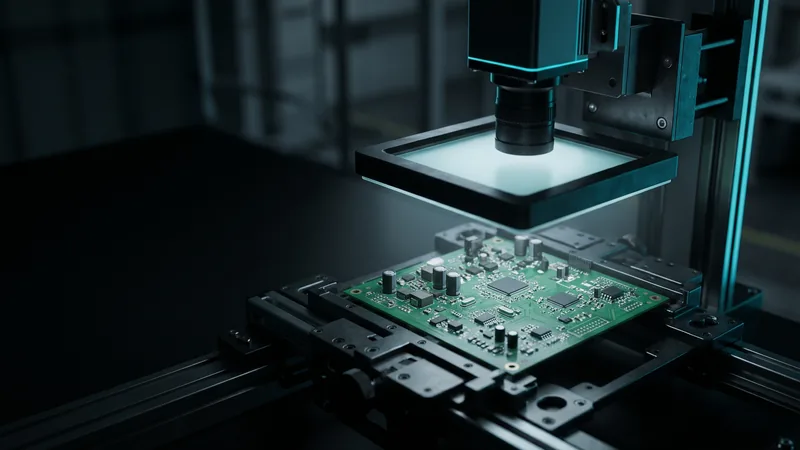
What is checked
- Component presence
- Component location against the board layout
- Polarity and orientation
- Barcode reads the board ID and selects the right program
When a part fails
The board is stopped with the failed component marked on the view. Results are kept per board for traceability.
This is assembly inspection, not solder-joint AOI.
IGBT module variant check
Module variants can look almost identical. A wrong variant in the wrong product is an expensive field failure, and it is easy to miss by eye.
- Station
- Static station, one or more cameras
- Apps
- Vision · Traceability
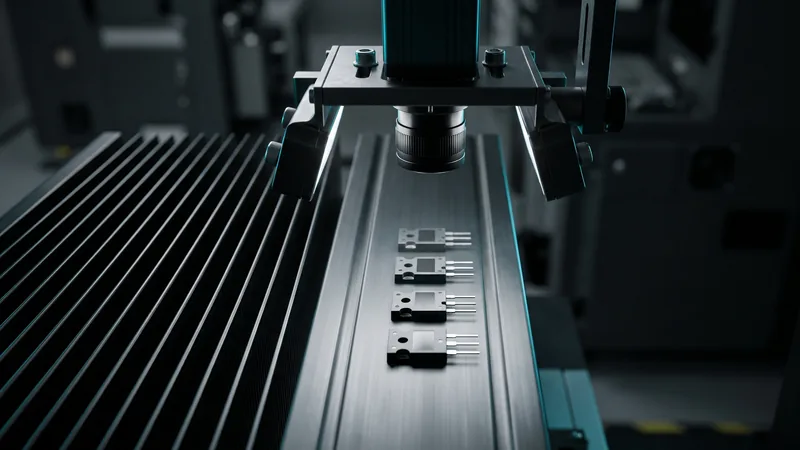
What is checked
- Reads the marking and codes on the module
- Checks the features that tell variants apart
- Compares the result with the variant selected for the batch
When a part fails
A wrong variant is rejected and flagged with what was expected and what was found.
Bearing pin count
A single missing pin or roller is hard to see in a full ring and fails early in service.
- Station
- Static station, one camera over the bearing
- Apps
- Vision
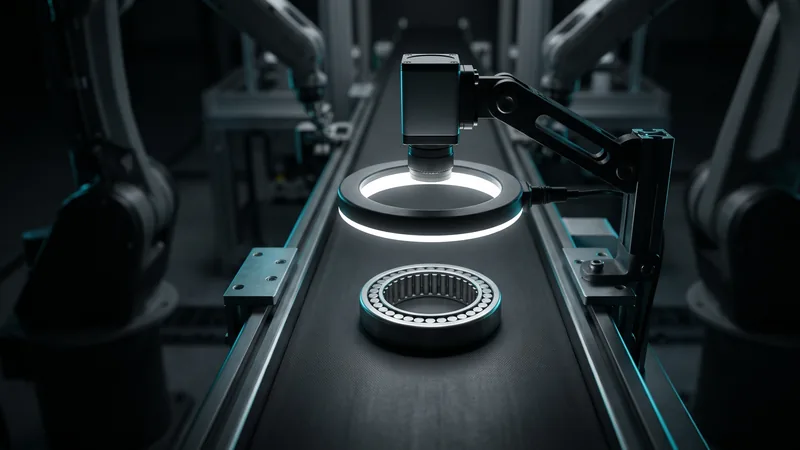
What is checked
- Counts the pins in the bearing
- Compares the count with the expected number for the variant
- Marks the position of a missing pin
When a part fails
The bearing is rejected, with the gap marked on the image for the operator.
Brick damage
Damaged bricks are sorted by people watching a fast line. Cracks and chips are missed when attention drops.
- Station
- Conveyor with cameras viewing the brick faces
- Apps
- Vision · Line Performance
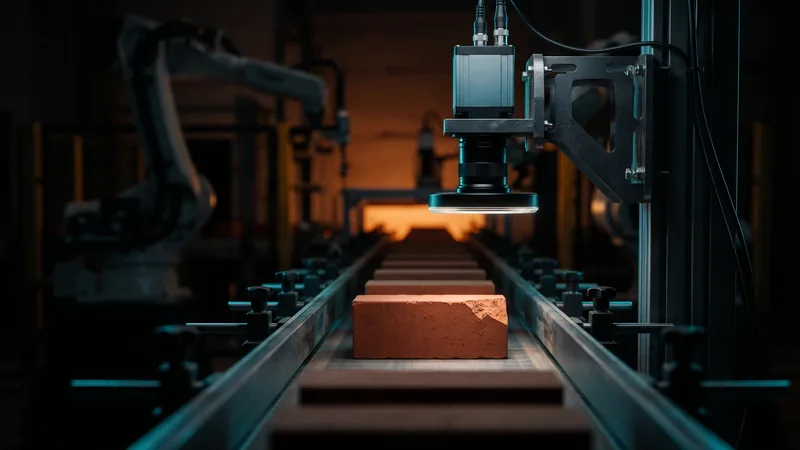
What is checked
- Cracks
- Chipped edges and broken corners
- Surface damage with anomaly detection
When a part fails
The brick is flagged for rejection through the PLC, and the reject rate per shift is tracked.
Beyond inspection
Where inspection results and machine data meet the quality and production apps.
Label and packing check
A wrong or unreadable label means a returned shipment or an angry customer, and it is usually found far too late.
- Station
- Packing station with a label printer and a camera
- Apps
- Label & Dispatch · Vision
What is checked
- The label is printed at the packing station
- A camera reads the printed label back
- The codes and text must match what was ordered
- Printer status is watched, and an unknown status is never treated as ready
When a part fails
The box is held until the label is right, and every check is recorded.
OEE from machine signals
OEE and downtime are logged by hand at the end of a shift, so the numbers are late, rounded and argued about.
- Station
- Existing machines, read over Modbus TCP, Siemens S7 or OPC UA
- Apps
- Connect · Line Performance
How it works
- Gorad Connect reads part counts, machine states and alarms
- Tags become standard events, kept through network drops
- Line Performance calculates OEE and downtime from those events
- Andon and shift reports in PDF and Excel
When a machine stops
Downtime and alarms show on the Andon as they happen, with the reason logged.
Closing the quality loop
An inspection station rejects parts, but nobody connects the rejects to a cause, an action and the parts that already shipped.
- Station
- Across stations and lines
- Apps
- Vision · SPC · NCR / CAPA · Traceability
How it works
- An NCR is raised when a station’s NG rate goes above the limit you set
- An out-of-control SPC characteristic raises an NCR in one step
- Traceability shows which parts, batches and shipments are affected
- After the NCR is closed, the platform compares reject rates before and after
When a problem repeats
Quality gets the NCR with the evidence attached, and the recall report shows the scope.
Your part is not on this list?
Most stations are a variation of these. Tell us about the part and the defects, and we will tell you honestly whether Gorad fits.